
Rethinking Tap-to-Pay
An Apple Wallet extension designed to reduce invisible overspending.
Role
Timeline
Skills
Figma
Overview
Contactless payments make spending effortless, but for many young adults, they also make purchases feel invisible. With Apple Pay, a transaction can happen in seconds, often without the pause that comes from pulling out a physical wallet or seeing money leave an account. For young adults navigating social pressures, daily purchases, and limited financial experience, this ease can quickly lead to overspending and regret.
Research Insights
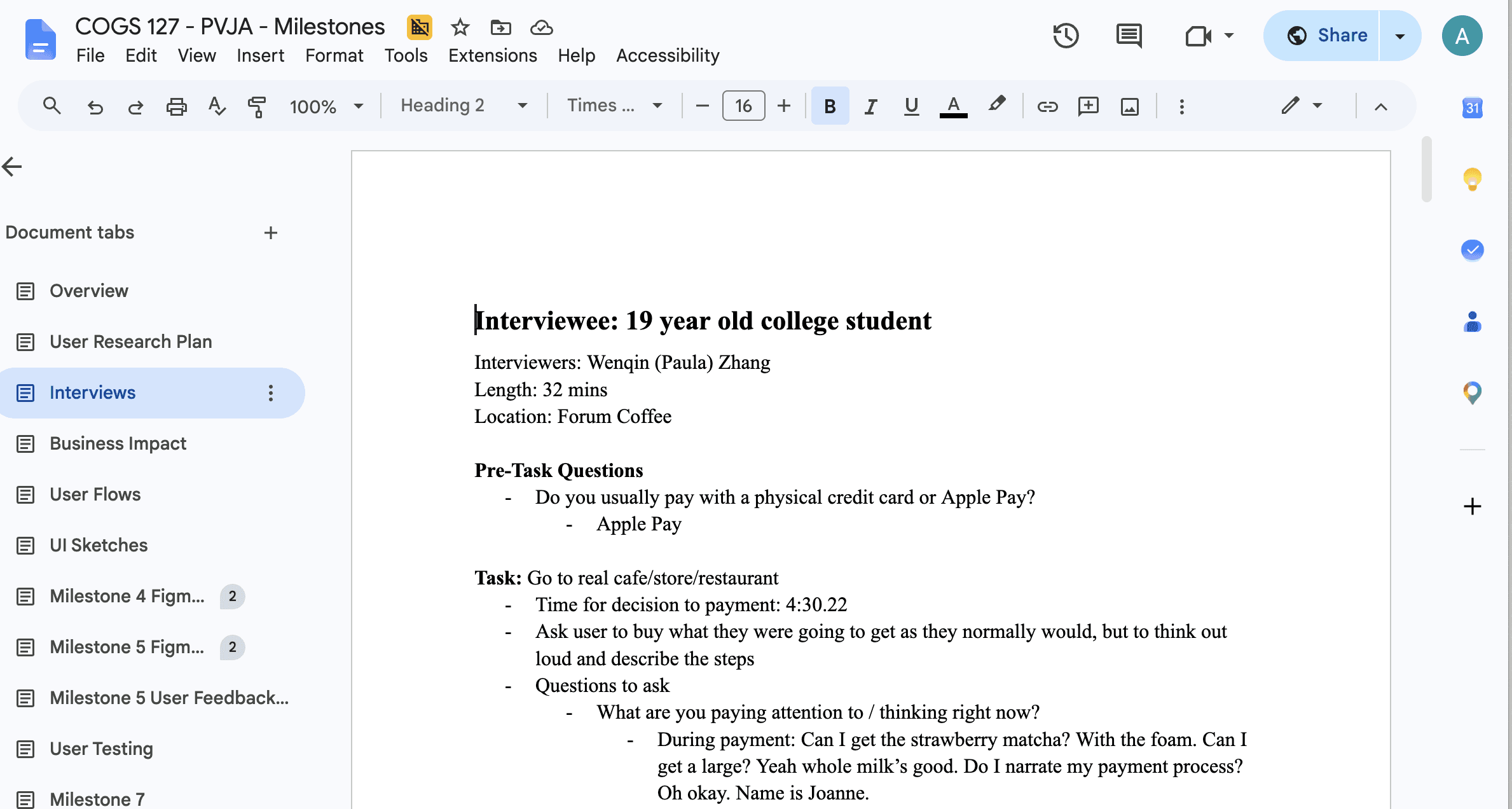
We conducted interviews with college students and found that Apple Pay makes purchases feel fast, convenient, and easy to forget. Participants often made decisions based on cravings, visuals, social pressure, or habit, but rarely paused to think about their recent spending before tapping to pay. Even when they noticed the price, the payment process happened so quickly that it did not meaningfully change their behavior.
Participants underestimated how much they had spent in the past week. Small food and drink purchases were especially easy to forget, while larger or more unusual purchases were easier to remember. Many participants also shared that they do not actively track spending or follow a clear budget, which makes it harder to recognize overspending until after the fact.
Design Solution
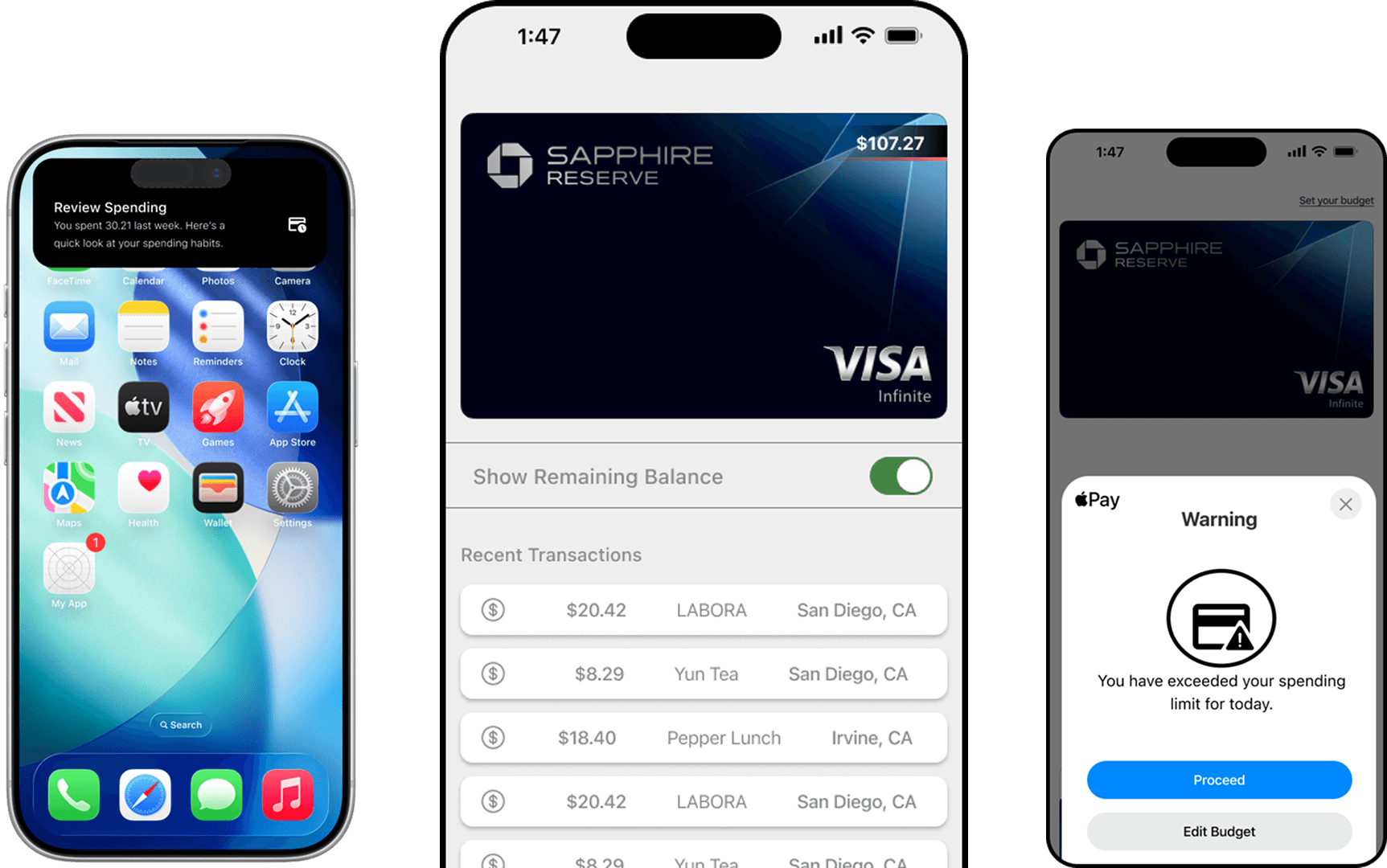
Apple Pay makes everyday purchases fast, but that speed often removes the moment of awareness that helps users think before they spend. we designed a smart-spending extension for Apple Wallet that makes spending more visible during the payment flow. Users can see their remaining balance, review recent transactions, and receive budget reminders before completing a purchase.
Instead of blocking users from spending, the feature adds a small moment of friction: a quick pause that helps users recognize their budget, understand the impact of a purchase, and make more intentional decisions with contactless payments.

Budget Setup: Added a spending limit flow directly within Apple Pay. Users can set daily, weekly, or monthly budgets and choose whether to add a passcode for extra accountability before completing future purchases.
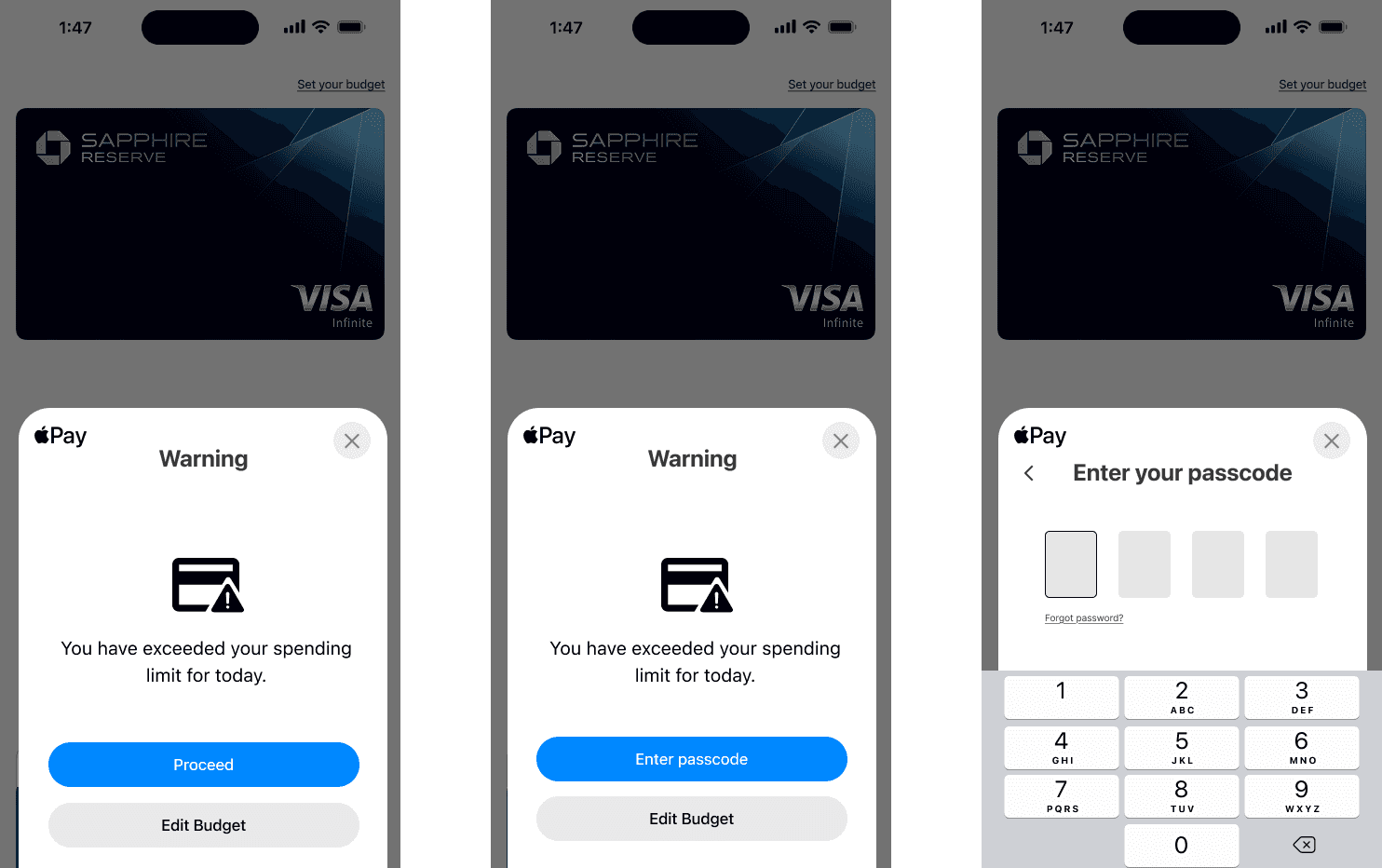
Spending Limit Warnings: Designed a warning state that appears when users exceed their selected budget. Instead of silently allowing another tap-to-pay purchase, Apple Pay creates a pause where users can review their limit, edit their budget, or proceed with intention.

Choosing the right reminder: Of the three spending reminders, selected the percentage-focused option because it gave users enough context without revealing exact spending amounts. This created the clearest balance between useful financial awareness and privacy.
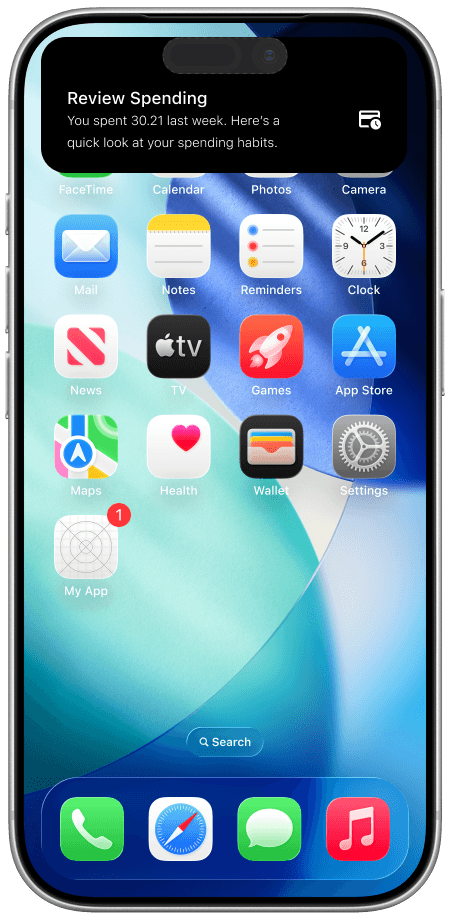
Spending Notifications: Created a notification that summarizes the user’s daily spending at a glance.
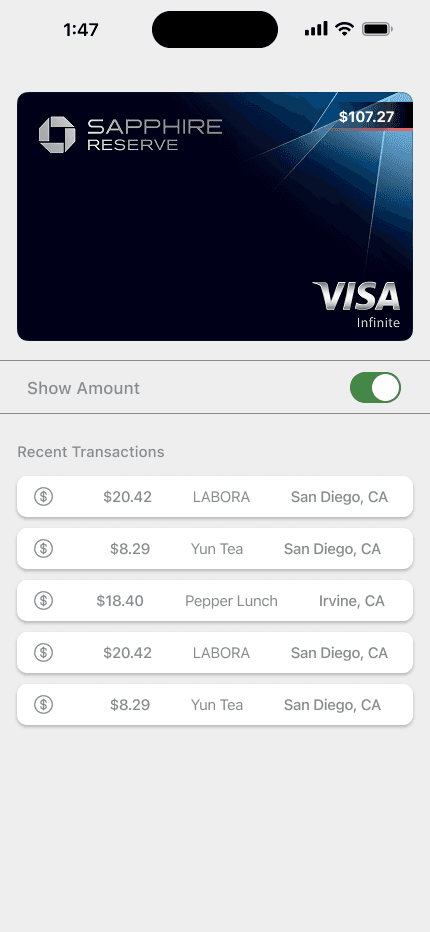
Transaction Visibility: Added a Wallet view that shows the user’s remaining balance and recent purchases in one place. This helps make small, easy-to-forget transactions more visible before they turn into unexpected overspending.
Reflection
Designing a pause without slowing users down.
Designing for spending awareness made me realize that friction is not always good or bad. Too much friction can make a purchase feel inconvenient, especially when users are in a real checkout moment and need to move quickly. However, no friction at all makes it easy to dismiss the impact of spending, similar to snoozing an alarm without really waking up.
I am still interested in exploring ways Apple Wallet can borrow from the physical world, not by making payment harder, but by making digital spending feel as tangible as cash or a real credit card.